Let’s meet some Turks

I have heard endless stories about Turkish hospitality, and I can’t say if these are Turkish traits or not, but in a very short time we have met people who feel like they represent an archetype – the Turquetype, if you will – albeit in vastly different ways.

Let’s meet a few.

Friends as family

When we lived in DC, we became friends with Janine’s co-worker Judy and Judy’s husband Haluk, who was born and raised in the old neighborhood in Istanbul called Sultanahmet. When Haluk found out we were coming to Istanbul, he insisted on picking us up at the airport. He commutes between DC and Istanbul, and he was planning to leave the day after we arrived so he put us in the care of his childhood friend Oktay and Oktay’s brother Adam. They own a restaurant and a handful of other businesses, and they check in on us daily and make sure that we’re well taken care of. When we are in the neighborhood, we make sure to stop by one of the shops, where we hang out and visit. Sometimes Oktay and I head down to the teahouse in the evening and play backgammon. Oktay says that since we’re Haluk’s friends and Haluk is like family, then we are by extension family, and he seems quite sincere about it. It’s like a Turkish syllogism.

Oktay beating me at backgammon

Oktay beating me at backgammon

We were at the restaurant the other night and Adam reported that the guy who plays the reed flute for the whirling Dervishes at the restaurant brought a pile of fish he caught off the banks of the Bosphorous into the restaurant. Would we like some? (A brief aside about the whirling Dervishes. I had grown up thinking that a whirling Dervish was a person with uncontrollable restless energy. Far from it. The Dervishes are practicing a form of Sufi religion in which they arrive at a meditative state that allows them to close their eyes and turn around hundreds and hundreds of times without tossing their lunch all over the front row. If it’s a party trick, it’s a great one. I confess I now have an obsession with these guys.)

Seriously, do NOT try this at home

Seriously, do NOT try this at home

Of course we want Dervish flautist fish. You don’t get that every day. It’s nice to be family.

Other Turquetypes

The crossroads guy during challenging times

Turkey is the bridge between Europe and Asia. In fact, you can cross a bridge in Istanbul and go from Europe to Asia. The other part of this position as crossroads of the world is that Turkey is in the middle of a mess of problems. The country shares long, tense borders with Syria, Iraq, and Iran. Since the Syrian civil war got going, more than 1.5 million Syrian refugees have poured into the country. We met one the other night at dinner. Over the course of our dinner, Muhammad told us that he fled Syria for Kurdish Iraq two years ago, and slipped across the border into Turkey earlier this year. His family left Aleppo, and he can’t imagine the day when he’ll be able to return, or if he does, what will be left. Muhammad was gracious, kind, and he was obviously very sad. I wish him well, but worry for him and his family. Turkey may find itself hosting Muhammed and his countrymen and women for many many years to come. They can’t go home, so they’ll have to stay.

The tout

If you walk ten feet in Istanbul, some guy will try to get you to come into his restaurant, his carpet store, his souvenir stand, or for all I know, his proctology clinic. At Muhammed’s restaurant, where you can get a very nice grilled fish, a friendly, short, stocky fellow in a leather jacket spends his evenings trying to reel in customers. Turns out fishing is in his blood. “In the morning, I fish for fish,” he told me. “In the night, I fish for people!” and pantomimed tossing out his rod and reeling in a couple that was making its way up the hill. He’s not bad at, either. He caught us, after all, and the fish was excellent.

Another fisher of people tried to strike up a conversation, which is simply a pretense to reel you into his business. A young kid named Mehmet wasn’t nearly as skilled as our fisherman friend, but he did his best, even though he didn’t quite have the vocabulary for an extensive conversation. He asked me where I was from, I asked him where he was from, he asked if I wanted to have dinner, I told him I had already eaten. Then I asked his name and he said “Mehmet” and took my hand, shook it, and air kissed me in the direction of both cheeks like he was in the Hamptons, or, it turns out, Istanbul.

The trailblazer

Fatima runs our favorite restaurant in Turkey so far, called Shirahne Cave Restaurant, in Goreme, which is in the central Turkey region called Capadoccia. Goreme is one of those cave towns in Capadoccia in which people have hollowed out the volcanic cliffs and outcroppings and turned them into dwellings. In the past several decades, locals have converted their homes into hotels and restaurants. On this night we ate in a cave and we slept in a cave.

IMG_1098

Be it ever so cave-like, there’s no place like home.

The town is almost comically charming. We wandered up one hill and perched ourselves in a bar overlooking the floodlit town, which brings to mind something out of an animated Disney film.

Goreme at night

Goreme at night

Goreme is a jumping off point for hot air balloon rides and tours of the cave churches and underground cities that dot the region and they’ve done a good job of making the place quite hospitable.
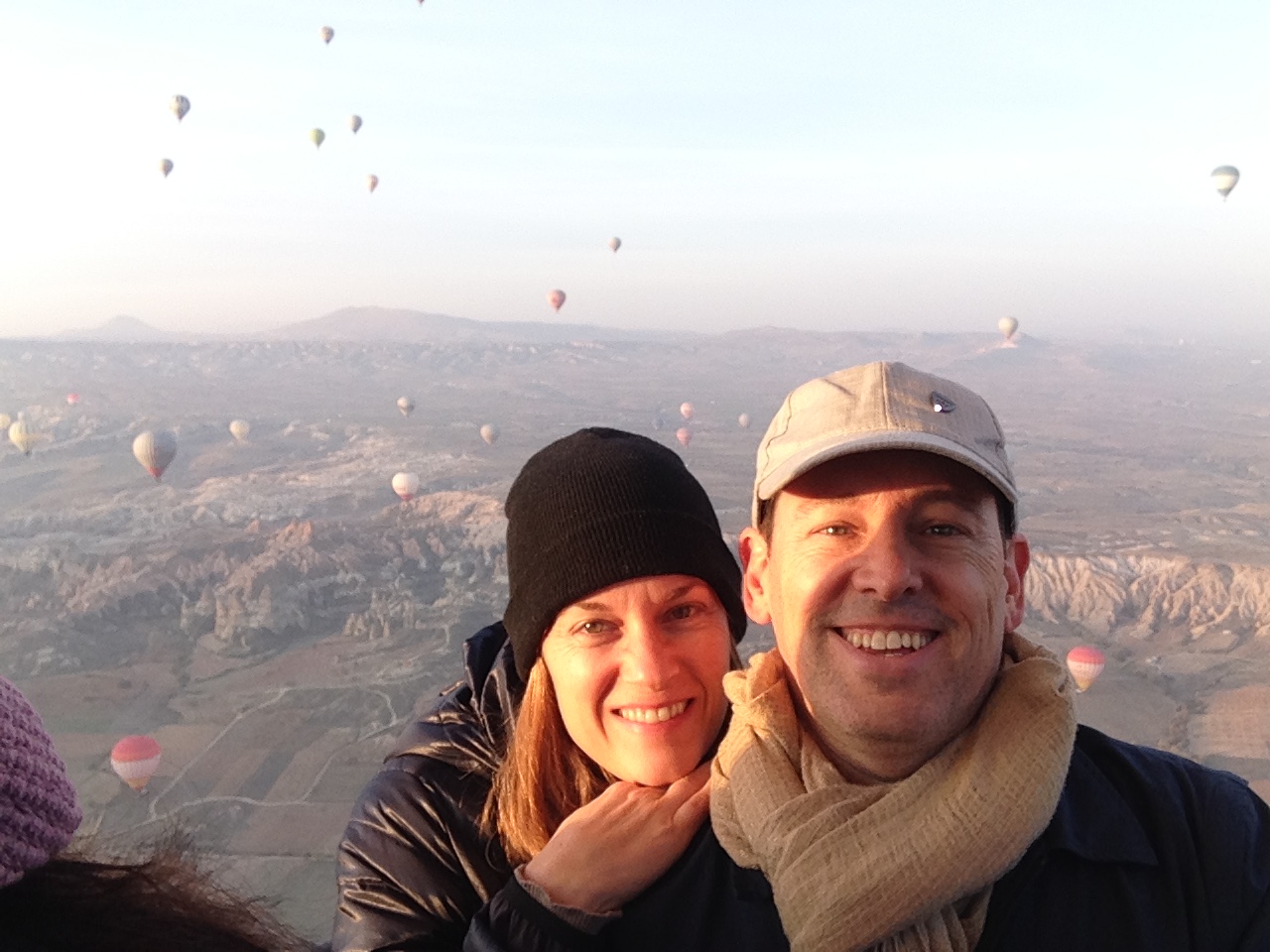
From 1,500 feet up

From 1,500 feet up

After our sundowner, we were getting peckish and we glanced at the menu in front of Shirahne and were thrilled to finally find a place that didn’t have kebabs, hamburgers, or pizza on the menu.

The first night (we went back again the next evening) we had chicken with chickpeas and a handmade pasta that was a lot like spaetzle all served together in a tomato broth. It was the Turkish red pozole, and just as homey and loving. We also had eggplant stuffed with spiced ground beef and a dandy Capadoccian white wine.

The next night we had tiny handmade pasta squares (which reminded me of the Goodman’s squares that my grandmother used to put in her chicken soup) tossed in homemade yogurt and topped with a tangy tomato sauce. It’s as simple as it sounds, but I can’t wait to make it when we get back home. I’d add a bit of dill and serve it as a side dish to a lamb tagine. sounds good, huh? We also had a local black zucchini (Fatima said that were the last of the season) served in clay pot with tomatoes, beef, onions, and peppers. It was a deep, soulful relief to eat real Turkish food after a week of very simple fare. (Although the simple stuff isn’t all bad – one popular street food is a crazy stuffed baked potato called a kumpir that has everything except camel sashimi in it. Janine tucked into one like she’d never eaten before.)

Don't try this at home either

Don’t try this at home either

The real highlight, though, was chatting with Fatima. She feels the pressure of attempting to do real food in a tourist town. Likewise, she is a very modern woman in a place that, by her reckoning, is ambivalent about the role of women these days. She wears jeans and doesn’t cover her head, which in central Turkey has different implications than it may have in Istanbul or on the more European west coast. She told us that she agreed to marry her husband on the condition that he didn’t smoke or drink. The World Health Organization says that 41 percent of Turkish males smoke, but given the astonishing amount of smoking we’ve seen, I find that figure hard to believe. In any case, it’s an audacious requirement here, but Fatima issued it nevertheless. She mostly employs women in the restaurant because they are more reliable and she wants to give them an opportunity to develop marketable skills. She is raising her daughters to be independent, and she has encouraged her first child to delay getting married until she has finished college.

Can you really claim to know something about a person after a brief encounter in a restaurant, or even a week sitting in their shop drinking their tea? Probably not. I’m no more an expert on Turkish people than I am on Turkish taffy. But it’s valuable to try to look just a little bit deeper. The open top bus is fun, but you also have to get off an walk around every once in a while.
The turtle makes a break for it, and other tales of derring do in Athens

After a week in Athens, I now feel that I am something of an expert on Athenian life and culture. My deeply considered thoughts are thus:

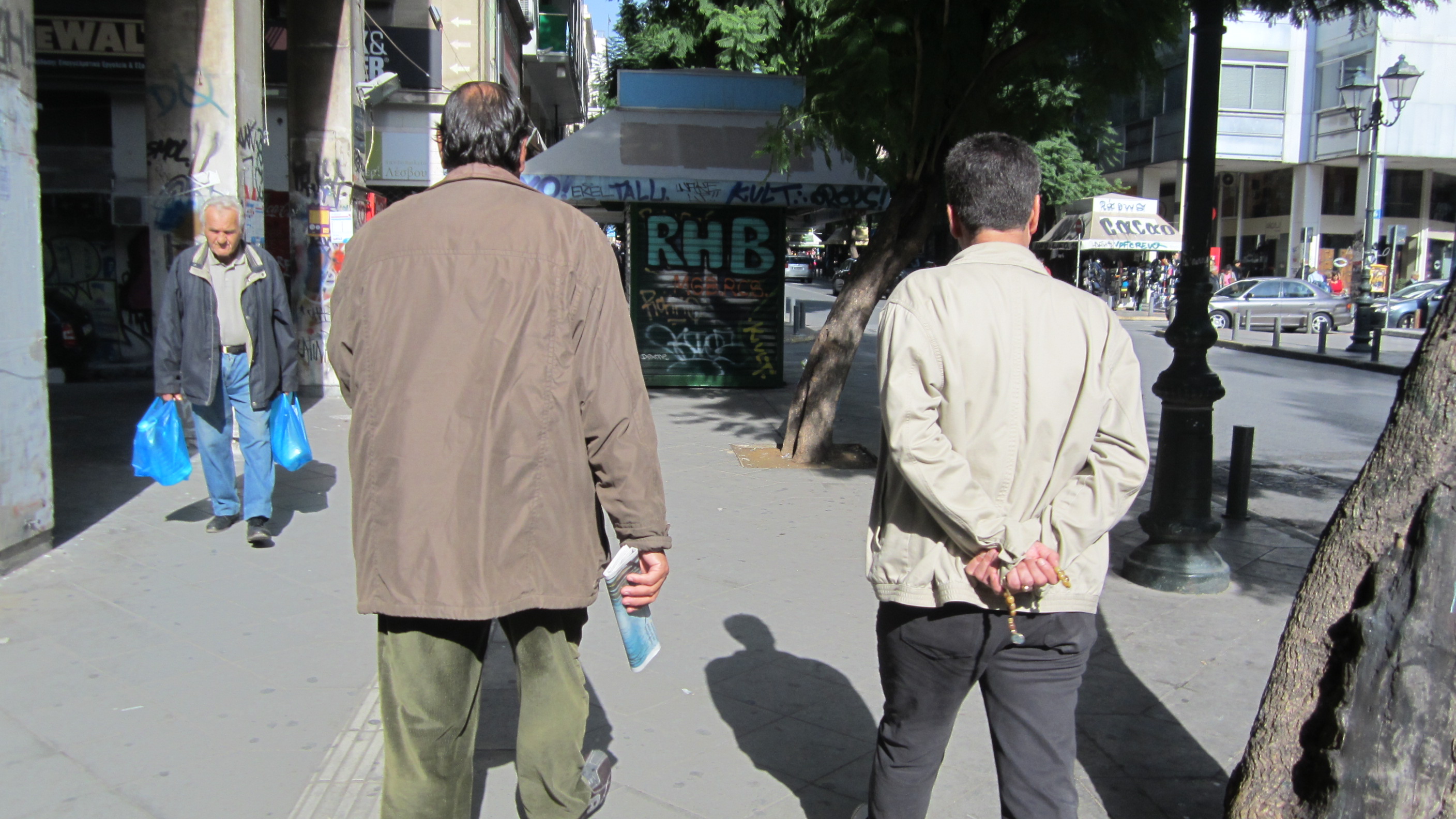
The worry beads look like fun. I’ve seen a lot of men working strings of beads this way and that. They spin them around, they play with each little bead. Each guy seems to have his own special ritual. I want a pair, but I will surely drive my wife crazy. Is this a guy thing? Do guys worry more than women? Who knows? I do know that I picked up a set for my mom, and I’m sure she’ll put them to excellent use.

Cold guys with worry beads.

Worried guy.

Worrisome, this worry bead thing.

Worrisome, this worry bead thing.

People seem chilly. Not socially, just physically. It’s been in the upper sixties and people are dressed for a space walk. The other day it was sunny and warm, and one guy was wearing a long sleeve shirt, a hoodie sweatshirt, and a puffy coat.

They smoke a lot here. Good heavens, the people smoke like chimneys. It is technically illegal to smoke inside restaurants and bars, but those laws are less heeded than the jaywalking laws in New York, or the helmet laws in Uganda. It’s best to get a table on the sidewalk and try to sit upwind of the rest of the city.

The service was gracious and lovely. People were friendly, they made us feel welcome, and they spoke excellent English. I do my best with Italian, French, Spanish, and Japanese, but Greek is a bridge too far. Thankfully it was not remotely a problem. Thanks, Greece, for learning my language!

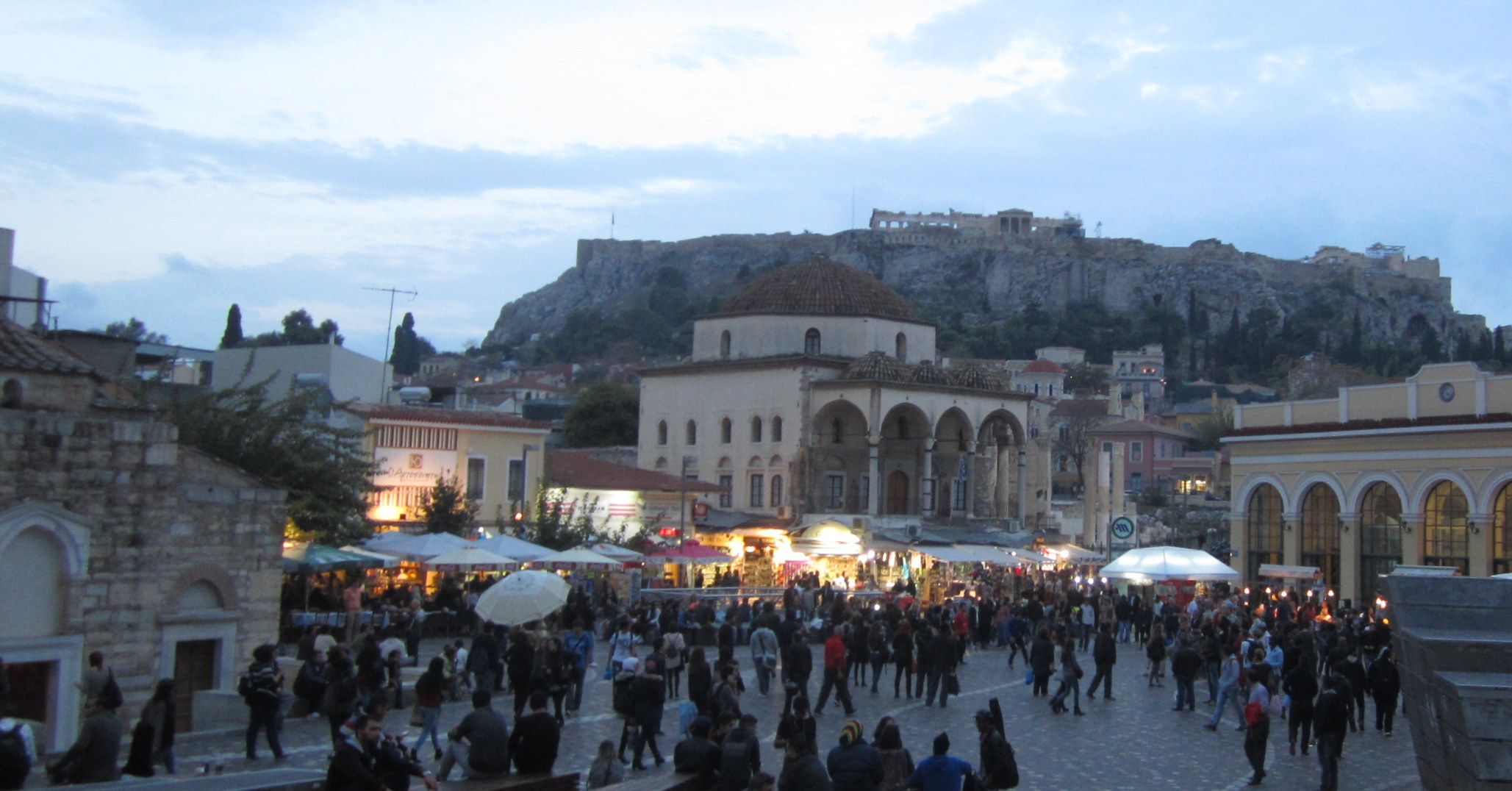
I’m hooked on souvlaki. It’s filling, it’s delicious, and it’s dirt cheap. These are the grilled meat sandwiches served on pita bread and covered in substances that will give you dragon breath for a week. Here in Athens one becomes a connoisseur rather quickly. On our first day, I sought out (surprise, surprise) some place that I read about that is purported to have the finest souvlaki on the planet or somesuch (CRAP, CRAP, CRAP, I just remembered that I read about that in the New York Times as well. I am as shallow and lazy a traveler as they come. Damn.) No matter, we couldn’t find it. I dragged Janine through this plaza and that and we just couldn’t seem to find the joint. I also flatly refused to sit down at one of the touristy souvlaki places on Monastiraki Square. It would defeat the purpose to pay ten bucks for a souvlaki. It would be like paying twenty bucks for a pizza…oh, wait, never mind.

We finally settled for a little joint right off the square. The stuff they put on the vertical spits are called gyros (which is Greek for “stuff they put on a vertical spit,” I think), and you can have chicken or pork. I love the concept of chicken on a spit. They just stack a bunch of boneless whole chickens and run a spike through them and cook them forever. The fat drips down and seasons the meat and the result is incredibly juicy and chickeny. But the pork’s great too. Then there’s that weird lamb and beef paste that you see everywhere in New York. That seems sketchy, although I also like sketchy. Or you can get a skewer of beef or pork. Let’s face it, they’ll grill up their thumbs if you ask nicely and it will be delicious. Then they put it on a pita bread, but not that flaccid, emaciated excuse for pita we get in the states. In Greece you get a substantial, swarthy, vigorous Frisbee of bread that soaks up the juices and keeps things more or less intact. Then they add mystery spices, lots of raw onion, sometimes tomato, and depending on what meat you pick they add that garlicky yogurt sauce called tzatziki that makes your children’s breath back home in the U.S. bad even though you’re here and they’re there. And just for kicks they throw a couple of French fries on top. French fries? I find this to be the strangest part of the procedure, but who am I to argue? The thing is, if you eat it at 1 you won’t be hungry until the restaurants open at 8 or 9. All that for 2 euros. What’s not to like? We’ve had three souvlakis so far, including one at the joint I had been looking for in the first place, and they’ve all been slightly different but absolutely delicious. What a country.

Cheap, fast, and delicious. Souvlaki!

Cheap, fast, and delicious. Souvlaki!

Okay, I’ve been told that there are things to do in Athens other than eat, and that may be true.

In addition to eating ourselves into food comas, we have been attempting to do some historical stuff.

Acropolis Museum

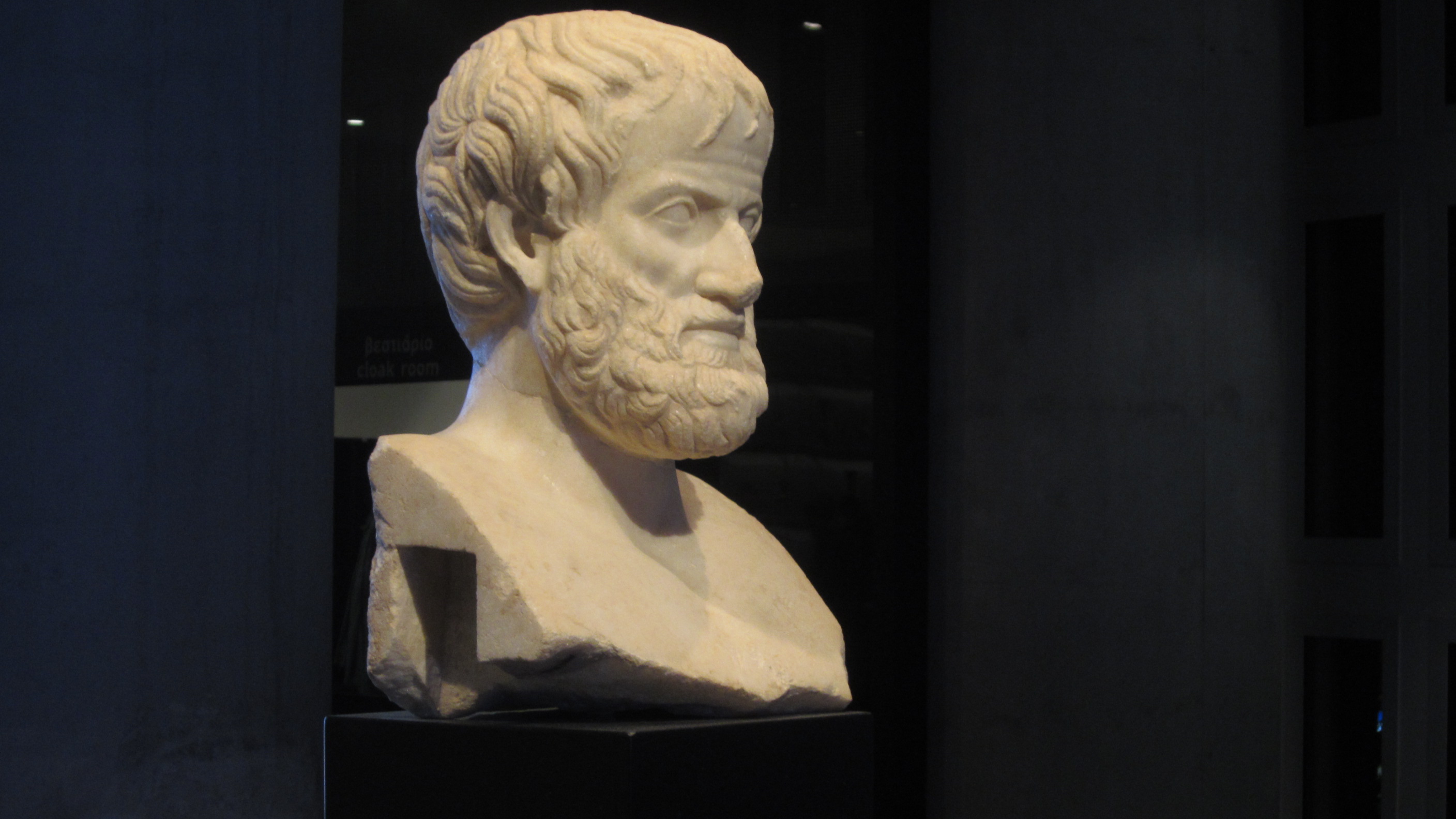
We decided to begin our tour of Athenian culture and history at the Acropolis Museum. This is an absolutely smashing museum, which opened in 2009. It sits just below the Acropolis (the site on the top of the hill that overlooks Athens) and has a great view of the Parthenon (the famous temple that dominates the Acropolis). The museum is modern and bright and takes a lot of the fussiness out of looking at old pieces of marble. It showcases a wide variety of artifacts recovered from the slopes of the Acropolis, it has some splendid sculpture, and it even has an extraordinary bust of Aristotle that was just discovered in 2005 when they were excavating the site of the museum itself.

Can you believe they just found this perfectly intact bust of Aristotle in 2005?

Can you believe they just found this perfectly intact bust of Aristotle in 2005?

There are other wonders – early in the process they realized that the museum was sitting on a valuable archeological site in its own right (people have been living in this neighborhood for the past six thousand years) so they built the structure on top of the diggings in a way that would allow the research to continue and which would let visitors observe the ongoing work. It’s nifty.

The dig under the Acropolis Museum

The dig under the Acropolis Museum

Finally, they have transferred the marble friezes from the Parthenon to the new museum in a full sized presentation of the Parthenon’s exterior. They are replacing the actual Parthenon with exact replicas, which may offend some. It’s a tough call. If you leave them out there they will be damaged by the elements and could be destroyed by earthquakes and such. Moreover, you can now look at these amazing sculptures up close in a controlled environment. But taking them away isn’t so great either. I’m not sure it matters. We’ll all be dead before the scaffolding comes down up there. Maybe our grandchildren will get to see a cleaned up Parthenon site. On the other hand, maybe not.

The actual Acropolis and the Parthenon

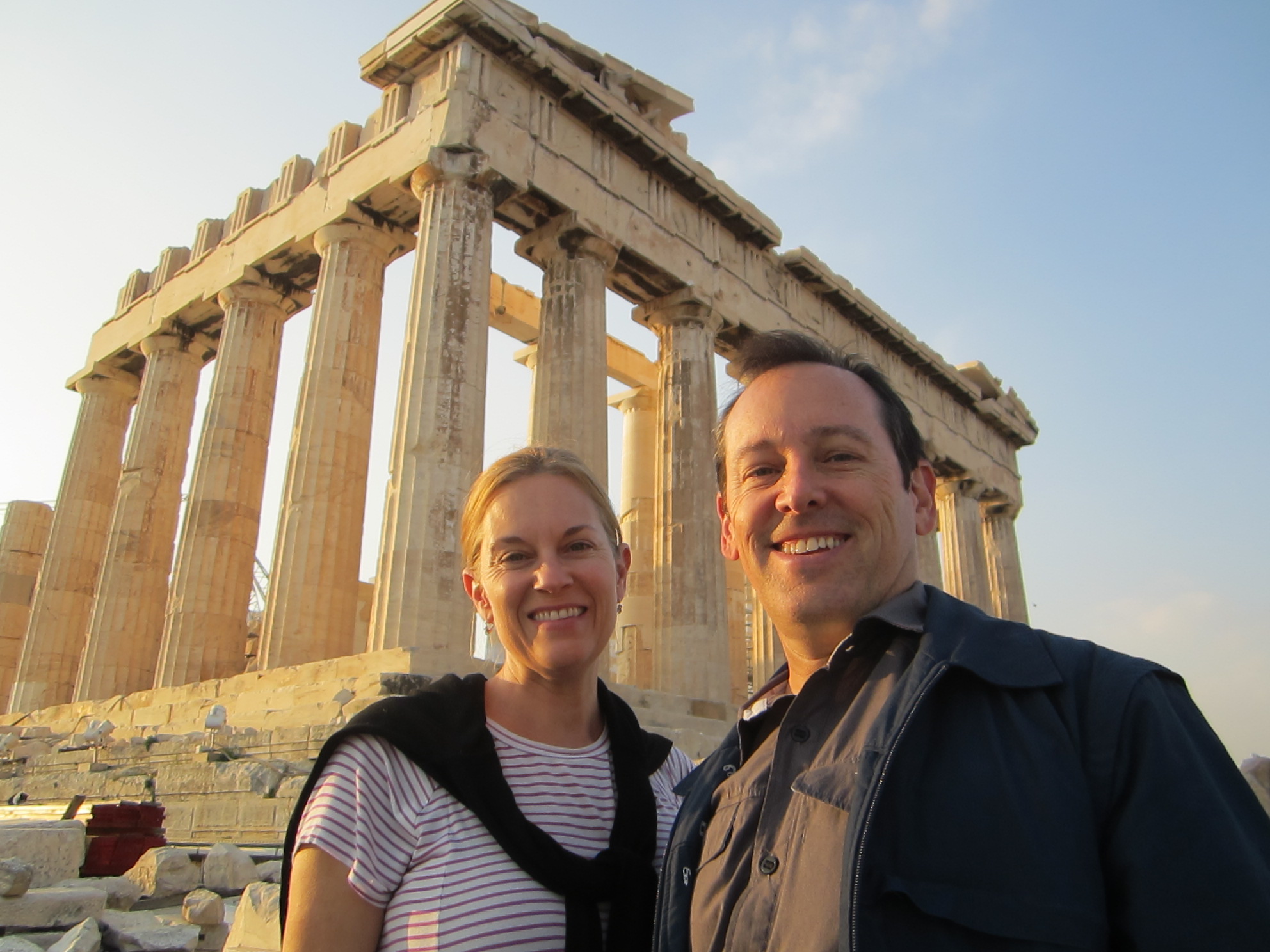
Armed with some context, we hiked up the hill the next day to see the place itself. It was nearing sunset, which made the visit even more lovely. Walking in the place of all that history is really something, but the story of how this amazing site has been plundered and mangled is quite depressing. The temple complex, which was constructed in 443 BCE, was pretty much intact until the 17th century, when bad things started to happen. In the mid-1600’s the entrance monument, called the Propylaia, was badly damaged when the gunpowder the occupying Turks were storing there exploded. Later, they largely dismantled another structure, the Temple of Athena, to shore up the hill’s defenses. Then, the Parthenon itself was bombarded by the Venetians in 1687. The final blow came when the Turks allowed Lord Elgin of England to walk off with many of the marble sculptures that surround the upper face of the structure. The Elgin Marbles, as they came to be known, are still on display in the British Museum. If you ask me, they should have hoisted Elgin up by his marbles, and the British should return the sculptures. The British position, as near as I can tell, has been, “Nanny nanny boo boo. We’re taking your marbles and you should go home.” Give back the marbles, Britain.

The loving couple at the Parthenon.

The loving couple at the Parthenon.

National Archeological Museum of Athens

The next stop on our archeological history tour was a visit to the archeology museum in downtown Athens. By this time you might imagine that we were maxing out on archeology, but in fact we were starting to get the hang of this stuff. There were thirty three galleries of statues, many of which I first saw in my textbook when I took my one and only art history class back in the 20th century. Despite all this truly impressive art and history, the highlight of the visit might have been the bold determination of this box turtle, which escaped the inner courtyard and was making its way into the exhibit without a ticket.

Turtle without a ticket.

Turtle without a ticket.

The Temple of Olympian Zeus

We wrap up our tour of old stuff with a visit to the Temple of Olympian Zeus, a massive site in the middle of town. There’s no museum, not much explanation, just a bunch of columns (including one that fell in a storm in 1852) and a few excavated outer sections. The lack of fuss is part of the charm, though. We shambled in late in the day, paid our two euros, and basically had the place to ourselves.

Temple of Olympian Zeus. Who thinks they should pick up the column? I'm on the fence.

Temple of Olympian Zeus. Who thinks they should pick up the column? I’m on the fence.

We had a number of other fun adventures, most of which involved food or cocktails. We wandered the central market and looked at the sheep’s heads and piles of fish and then had a nice market lunch. We hit a few rooftop bars for our pre-dinner cocktail. (Is the economy rebounding? Maybe, the cocktails were almost as expensive as they are in New York.)

My favorite dish of the visit was at Melilotos, where we returned for a second visit, proving that I can choose good, cheap, and reliable over different once in a while. The dish that made me sing was meatballs in tomato sauce with tagiatelle. What? Italian food in Greece? Well, it was Italian with a twist – the meatballs were made with cinnamon and mint and I can’t stop thinking about them.

Today we are off to Istanbul. What should we do? Where should we eat?

And finally, my favorite picture so far:

Having fun with my selfie stick.

Having fun with my selfie stick.

I Heart Athens! Who knew?

Raise your hand if you’re a big fan of Athens. I know, right? It’s hot, it’s noisy, and as Yogi Berra probably didn’t say, nobody goes there anymore because it’s too crowded.

Well, the hip, happening bars are crowded, that’s for sure. And so are the very good restaurants. It’s crowded in a good way. Now that summer’s over, the only tourists here are the childless and the Dutch.

I’m not entirely sure why we’re here in the first place. Janine always wanted to go to Greece, but she really wanted to go to the islands. Having decided that beach season is over, we plugged Athens in for a week anyway, just because.

We have been delighted by the warm reception. After Greece’s brush with economic death, Athens feels like that girl who has finally been asked to dance and she responds with, well, let’s call it enthusiasm. People have been friendly and welcoming. I have to confess that by contrast more than a few Italians seemed like they were doing their best impersonation of Parisians.

We arrived with no expectations whatever. Would we be able to communicate? In most of Europe we seem to be able to get by just fine, but Greek is, well, Greek.

What looks good to you, honey?

What looks good to you, honey?

We needn’t have worried. Pretty much everybody in this part of town speaks English better than we do. I had assumed that we would like the food, but I didn’t realize how much. Greeks know how to eat (although they’re not sure when).

Our Greek arrival party started ominously, when a dour woman answered the door to the apartment we rented. The apartment is right off Monastiraki Square, which is not as touristy as Plaka (which boasts pedestrian alleys all selling the same I Heart Greece t-shirts), but more conventional than Gazi, where you find the techno clubs and gay bars.

Athens!

Athens!

Our landlady Valentina, a serious woman in her fifties, started to warm up as she pulled out a map and gave us the lay of the land, telling us where to go and what to do. She also wanted to make sure we felt safe. “In Athens, you don’t worry from nothing,” she reassured us, although she reminded us to leave our passports in the room. Trust everyone, but cut the cards, as the saying goes. Why does every city think it has the best pickpockets?

Often, the first night in town sets the tone for the visit. For us, it’s the most unstructured time of the trip. I usually haven’t found the out of the way restaurant in the hip neighborhood yet (more on THAT later). Most of the time, you just want to get your bearings and find something to eat. Sometimes this results in the lousiest, most touristy thing you do. Other times, you hit paydirt. On our first night, we made a trip to the supermarket, and then started wandering in search of a meal. At first, the pickings were looking kind of slim. We were in a fairly commercial part of town and nothing was open. Then, all of a sudden we found ourselves on this charming plaza full of restaurants and cafes in which happy, hip young people were tucking into plates of fish and meat and bowls of other stuff. Things were looking up. We approached one of the restaurants, called Melilotos, and were greeted by a fellow who seemed genuinely happy to see us. I wanted to hug the menu. Everything looked good. We settled on a very fresh salad and a roasted boneless chicken leg coated with some nifty blend of Greeky spices and stuffed with greens and just a bit of greek cheese. For four euros, we had a half a liter of a light, fresh, white that was everything I love about Mediterranean wine. I think the whole thing was thirty bucks. This was a very good start.

On our first full day in town we did one of the most touristy things you can do – we hopped aboard the hop on, hop off bus. I actually like these things. They’re an amusement park ride of whatever city you’re in. You sit and watch all the attractions go by. Sure, you can hop off and do something, but doesn’t that really defeat the purpose? The goal, as far as I’m concerned, is to sit and do nothing, but feel like you’ve actually accomplished something. If you’re really ambitious, you make a few mental notes of places to return to. This also was very much in keeping with our sightseeing philosophy – try to walk the thin line between boredom and exhaustion.

A perfectly good view from the hop on hop off bus.

A perfectly good view from the hop on hop off bus.

After we finally hopped off, we settled into what has become our evening ritual – cocktails at a bar or café, preferably on a nice plaza, and then dinner.

I should note that Athenians eat really, really late. Like Madrid late. We have pushed the cocktail hour later and later and we are still the first ones in the restaurant at 8 or 8:30. Anyway, we had our cocktail at a fun little place around the corner called Bar Osterman, and headed off to dinner. (I herewith make a very shameful disclosure – I discovered all three of the establishments we patronized this evening in an article in the New York Times. I am now the middle aged, post-yuppie who outsources his travel advice to the New York Times.)

Our division of labor generally proceeds thusly – Janine is the expert in selecting our lodgings and does so with verve and panache. I make restaurant recommendations and I am the navigator. For dinner, I had selected a place called Manimani, at which you can get a “modern taste of hearty Peloponnesian cuisine” according to, yes, the New York Times. Armed with Google Maps, which has changed the modern traveler’s life, we set out for the restaurant. Things didn’t go quite according to plan, however. Google Maps seemed confused, with the little blue arrow twitching this way and that. Janine wasn’t fully invested in the selection of the restaurant in the first place, nor did she particularly feel like walking the twenty minutes the Google told us it would take to get there. When this happens, she either starts walking slower or she just pulls up, like a steeple chase horse who refuses the jump.

By this point, my confidence in the whole endeavor was flagging, but I was not ready to throw in the towel just yet. I was a one-eyed Sherpa with diminished lung capacity and a bad back, but I was determined to lead the summit push. After much backtracking, we arrived at our destination, but something was obviously wrong. There was no hip, New York Times-recommended hotspot, just an empty storefront. “I think we’re on the wrong street,” Janine offered, unamused. Thank heavens. We redirected to the proper street, where we found…another empty storefront.

Oops, I was looking at the wrong number. There it was, little more than a staircase with a very small sign leading to the restaurant above. There was still hope.

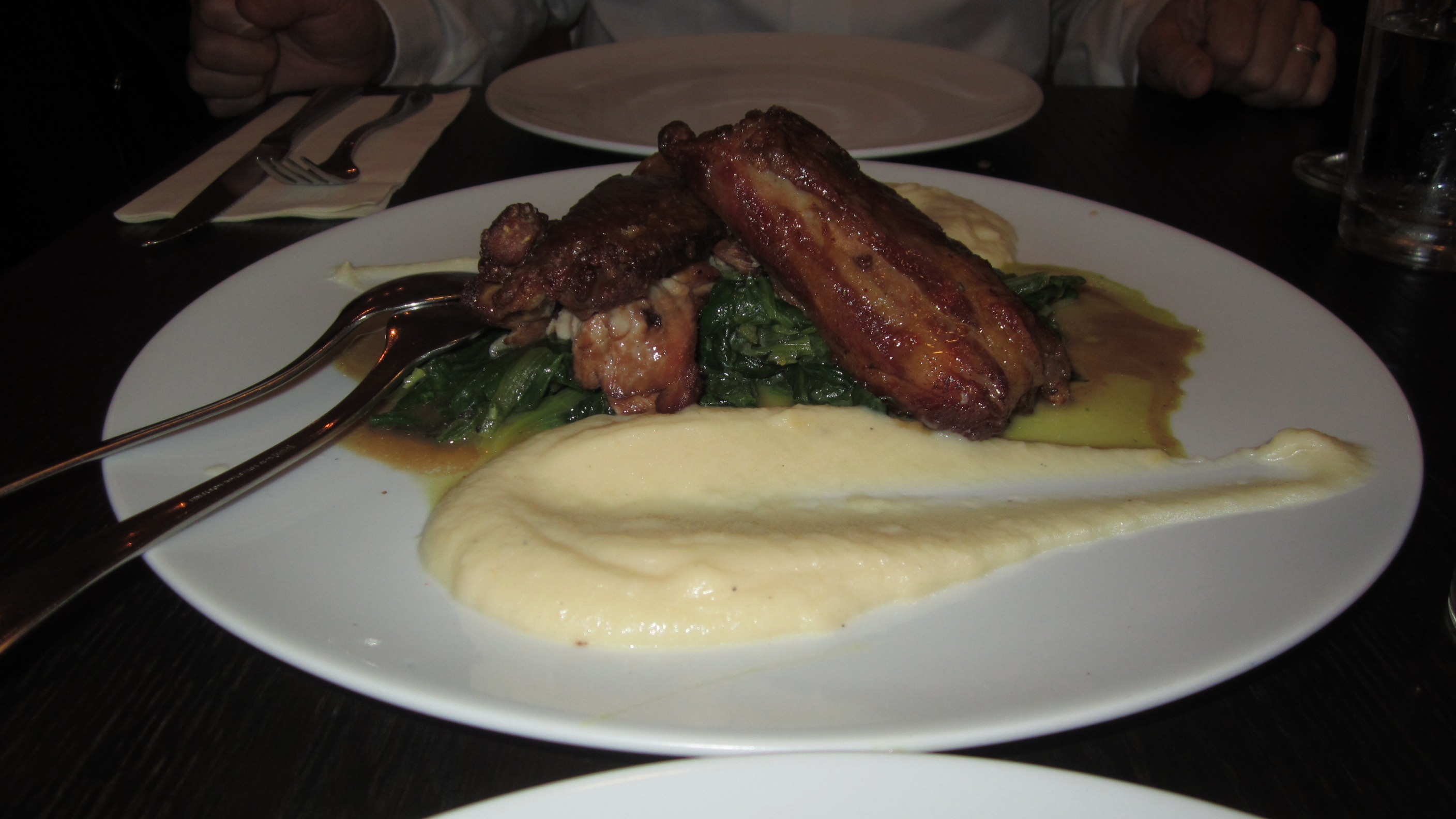
Once inside we were welcomed like old friends. We had no reservation but were seated at the last two-top in the place. We had a great meal with more ridiculously cheap but delicious Greek wine. The highlight was a perfectly roasted lamb on a celery root puree.

Roasted lamb on celery root puree. Even Janine admitted it was worth the shlep.

Roasted lamb on celery root puree. Even Janine admitted it was worth the shlep.

Our server wrapped up the meal by bringing us a complimentary little bottle of mastiha, a grappa-like boozy thing from the island of Chios, wherever that is. It’s hard to describe, but it smelled like a pile of raked leaves on a fall day and tasted like I imagine the bark of a tree would taste like if you fermented and distilled it. But in a very good way. I love a meal that ends with a bit of free tasty hooch that I’ve never heard of. Janine forgave me.

We ended the evening with a nightcap at a very cool spot next door to our apartment called Six d.o.g.s, a place that would be quite at home in Soho. It has a gallery space, a club with live music, and a courtyard bar packed with hip young people. We sipped our drinks, took in the vibe, and couldn’t believe that we were in Athens, of all places. I heard about it, you guessed it, in the New York Times.