Malls, Steaks, and Nice People – A Hodgepodge of Buenos Aires Stuff

We put Maggie on a plane the other day and after three really terrific weeks with my mother and/or our daughter, we have now returned to normal programming, if you can call traipsing around the world normal.

Back in Buenos Aires after a week in Uruguay, our first order of business was to go…to the mall. It seems that Knucklehead Jones left a small pile of clothes in a dresser drawer at our last stop, and I was down a number of vital pieces of clothing. One of them was my new favorite shirt, made by the same nice people who make my special undies – Ex Officio. Another, alas, was a pair of those undies. I’m down to four.

The big tragedy was losing that shirt. It dries fast, doesn’t (er, didn’t) wrinkle, and it just looked snazzy. And there it sits, lonely, scared, and abandoned, in a dresser drawer in Uruguay. (The owner of the apartment, bless him, said he’d send the stuff home to the States, but a fat lot of good that does me here.)
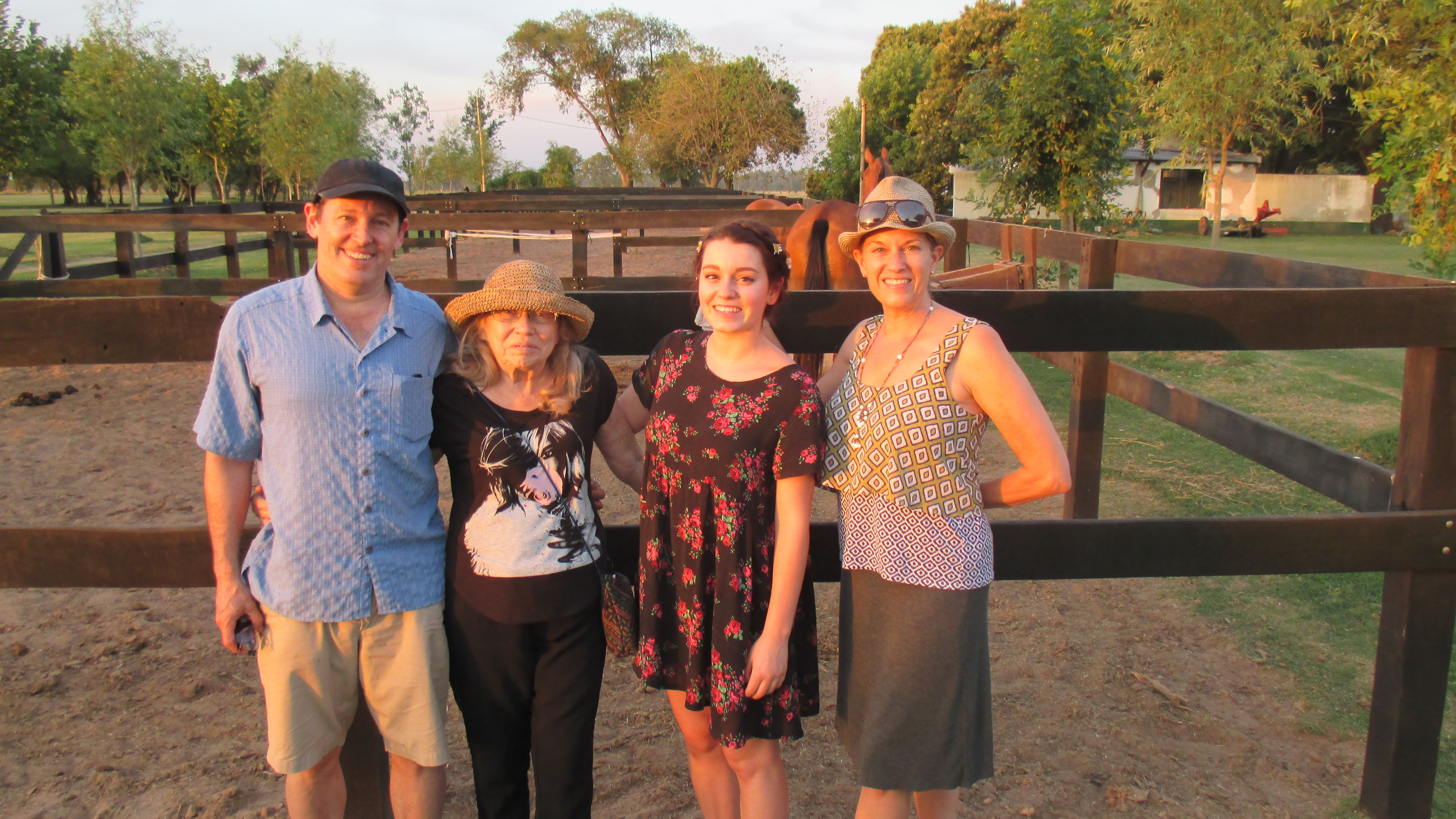
With my favorite people (and my favorite shirt)

With my favorite people (and my favorite shirt)

I hate losing stuff (especially snazzy wrinkle-free shirts), I hate shopping, I really hate buying clothes, and I hate malls. I was full of hateful hate. After several hours of scouring the mall for overpriced pale imitations of my beloved shirt, among other lamented items, I was able to procure some replacement duds, but the experience was like a bladder exam, only not as fun.

The mall of hateful hate notwithstanding, I liked Buenos Aires a lot. It’s a cosmopolitan, peppy, fun, tango-y place. People eat, they drink, and they dance. I cannot think of a single person we encountered who wasn’t cheerful and friendly. Can you imagine that? Cabdrivers were honest and efficient (although once, when I was going out to the airport to meet my mother, one cabbie asked if we could stop at McDonald’s for coffee – I explained that her flight had already landed, which he took in stride). Shopkeepers were gracious, even on the rare occasions when we didn’t buy anything. Waiters seemed genuinely glad to see us. People were amazingly patient with our infantile Spanish. This is easy travel, and it’s a jumping off point to places like Patagonia and Iquazu Falls that we’ll return to someday, I hope.

If you like steak, it’s a particularly good town. After a few culinary misses, we decided to play to the place’s strength – meat. We wandered into a relatively pedestrian-looking steakhouse and did what you’re supposed to do – we ordered some salad, a steak, some fries, and some Malbec – and life was mighty fine. Today, we hit the jackpot at an absolutely charming place called Gran Parrilla del Plata with almost the same format. We had a simply perfect meal of skirt steak, a salad of lettuce, tomato, carrots, and beets, a plate of fries, a morcilla sausage (made from blood – Janine was not nearly as happy about it as I was), and a 500 cl bottle of simply smashing Malbec. When the waiter couldn’t interest us in dessert or coffee, he brought us a round of sparkling wine on the house anyway. The bill came to thirty bucks. It was all waaaayyy too much fun for a Tuesday afternoon, and I almost felt guilty, but not quite.
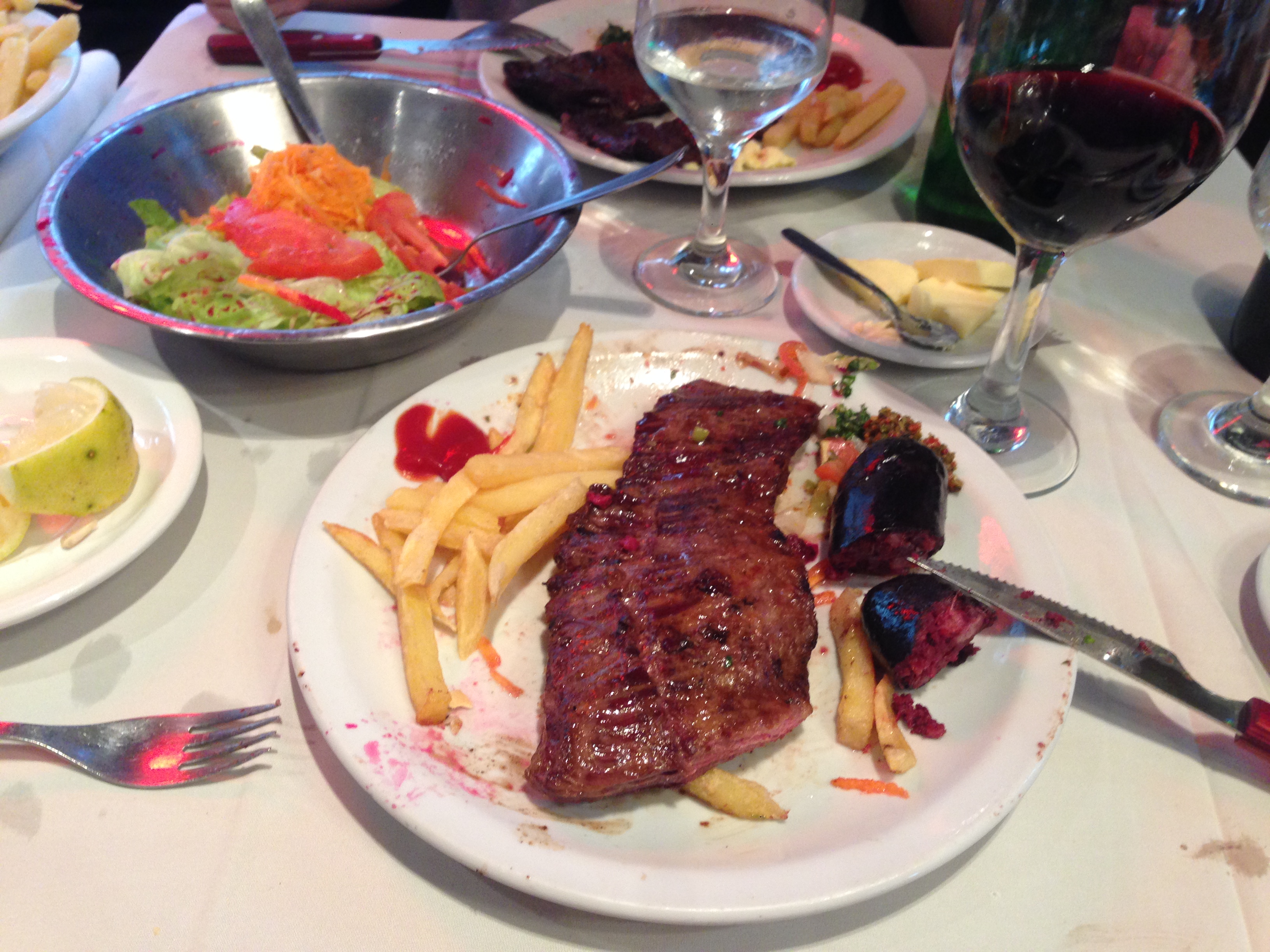
Does this meal rival the chivito?

Does this meal rival the chivito?

On our return from Uruguay we repositioned ourselves closer to downtown in the neighborhood called San Telmo. Our new apartment was just a short walk to a great weekend flea market, but more than that, I think it’s good to have a chance just to try different parts of town on for size. These extended visits give us that luxury. We arrive in town, suss the place out a bit, wander out of town for a spell, then resume the visit in a different neighborhood.

Janine does love a flea market.

Janine does love a flea market.

If Palermo Viejo was Soho (New York’s Soho), with cafes and boutiques, San Telmo was the West Village (um, with cafes and boutiques). Today, we also wandered through Recoleto, which could easily stand in for the Upper East Side, complete with dainty dowagers and older gentlemen in summer suits and ties. The Upper East Side does not have the gravesite of Eva Peron, however. Wander the streets of Buenos Aires and you could be in New York, Madrid, Paris, Barcelona, or even Rome, but remarkably free of the attitude.

We also took in an actual tango show. Mind you, we didn’t dig deep for the fancy pants tango bar extravaganzas, which will run you at least a couple hundred bucks before the night is out. No, cheapskate Eric lobbied for the intravaganza presented by the non-profit Borges Cultural Center, which, if you ask me, put on a perfectly fine tango show for twenty bucks. There were men and woman, they wore fedoras, they danced, they twirled their legs in that Argentinean way, and it looked like tango to us. There was also this earnest young fellow who repeatedly crooned at us (while the tangoers changed costumes) and who made up for in passion what he lacked in subtlety. Next time, though, we’ll go to a milonga, which is basically a neighborhood dance hall that starts at midnight and goes until dawn. They usually start with a tango lesson and then let people loose on the dance floor. To do this, though, you need to take a disco nap at around eight, and then drink a pot of coffee chased by a couple of Red Bulls. If you do all this you might be able to pull it off, but then again, maybe not.

Finally, we made yet another visit to a famous theatre without actually seeing a performance in it. The Teatro Colon is said to be one of the finest acoustic opera houses in the world. It’s certainly one of the most beautiful theatres I’ve seen. I would spend a month shopping for socks in malls to see an opera here.

Just another beautiful theatre without a performance. (Photo courtesy of Janine, who graciously agreed to let me use it.)

Just another beautiful theatre without a performance. (Photo courtesy of Janine, who graciously agreed to let me use it.)

On the other hand, while the acoustics may be nearly perfect, whoever designed the men’s room needs to find another line of work.

I swear I took this photo in the Teatro Colon and didn't crib it from somebody's PowerPoint presentation on failure.

I swear I took this photo in the Teatro Colon and didn’t crib it from somebody’s PowerPoint presentation on failure.

We are now off to South Africa and Kruger National Park. We may or may not have internet access, so if I go quiet for a while, please don’t be alarmed. After that, we’re off to New Zealand and Australia, about which we have done ZERO research. Any recommendations about where to go or what to do will be most welcome. See you in the funny papers.
All hail the chivito – the national sandwich of Uruguay!

This post comes with a parental warning. It contains food writing at its most obscene. Please put the children to bed lest they
look over your shoulder at the dirty pictures. With any luck they are too young to read.

Now sit back, pour yourself a cocktail (unless you’re at your desk, in which case you may just prefer to take a nip at your flask) and let me tell you about the mighty chivito – the national sandwich of Uruguay. (By the way, a shout out to loyal reader Phillip Shaw, whose timing was impeccable – he sent me a note about the chivito as I was in line to buy one.)

Uruguay, you say? What happened to Buenos Aires? We wanted a little time at the beach and this was the closest, cheapest way to do that. The sleepy town of Colonia, Uruguay sits across the mouth of the Rio Plato from the Argentine capitol, an hour away by ferry.

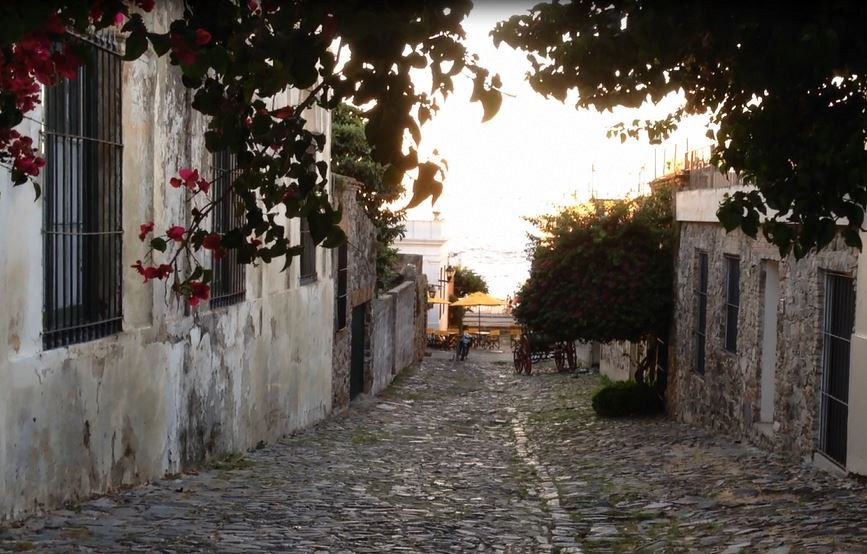
Cobbly, quaint Colonia, sleeping peacefully.

Cobbly, quaint Colonia, sleeping peacefully.

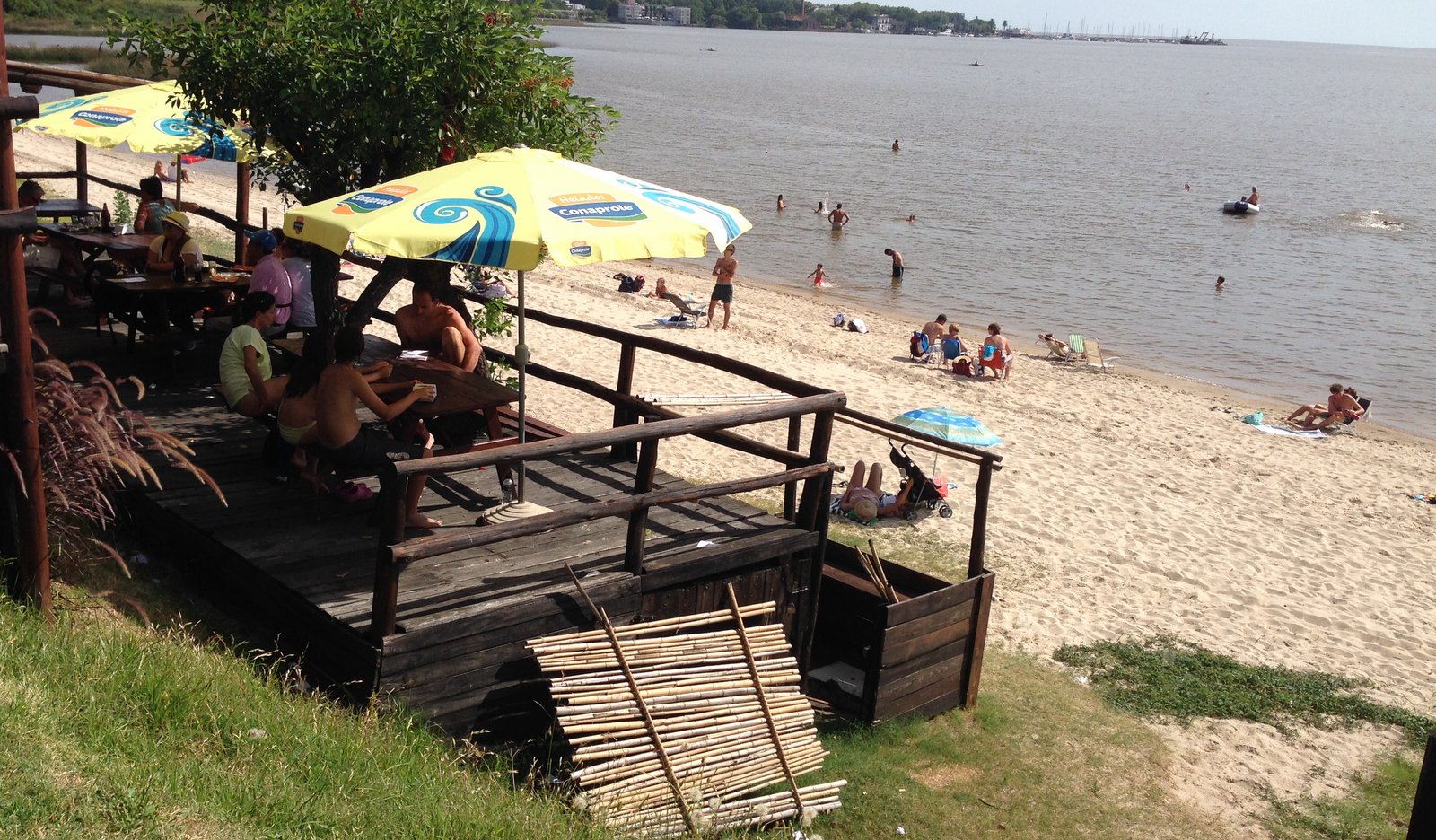
The river then empties into the South Atlantic. It’s the strangest body of water I’ve ever encountered. It’s a thirty mile wide fresh water, well, thing, that’s about ten feet deep. You could almost walk across it to Buenos Aires, which we can see way off in the distance from our twelfth floor apartment. The water is muddy brown, which might put you off, but it’s entirely pleasant to wade in from one of its quiet sandy beaches. So it’s not really the beach, but it will do in a pinch.

A perfectly nice beach!

A perfectly nice beach!

Colonia was so close yet so far. We got to the dock early, which was lucky, because our 1:15 ferry was cancelled and we were able to get on the 12:15, although we were then informed that it would be delayed until 1. There was a line to get onto the boat, but the poor saps who obeyed the rules were outnumbered badly by the throng that just rushed the door when the departure was announced. It was mayhem. I blame this on poor governance.

The boat made a nifty one hour trip across the water. Upon landing, we just sat there. There was much confusion about whether, when, or how we might get off the boat. About half an hour after landing, somebody made an announcement, which was met with sarcastic applause and then…nothing happened. After more waiting, people were allowed to make a mad dash for the exits. With sincerely jangled nerves, we finally made it ashore.

The town itself could be quieter but I’m not sure how. For four bucks (although thanks to the vagaries of demand pricing the ferry can cost as much as fifty, if you can believe it) you can travel from crazy BA to the town that time forgot. Colonia has many charms. You can get U.S. dollars from the ATM, and there’s one exchange rate – no blue rate to make you crazy. It’s full of history. In fact, we wandered by this store and saw a family that looked amazingly like us. Apparently we have Uruguayan relatives deep in our past.

Janine, Maggie and I were astonished at the amazing resemblance we bore to this distinguished Uruguayan family.

Janine, Maggie and I were astonished at the amazing resemblance we bore to this distinguished Uruguayan family.

You can sit on a flat sandy beach, you can wander little cobblestone streets, you can have a cocktail at a cute little restaurant that has great appetizers and mystifyingly bad entrees as you watch the world’s most beautiful sunset, and you can watch people wander the streets lugging their thermoses and sipping maté through a metal straw.

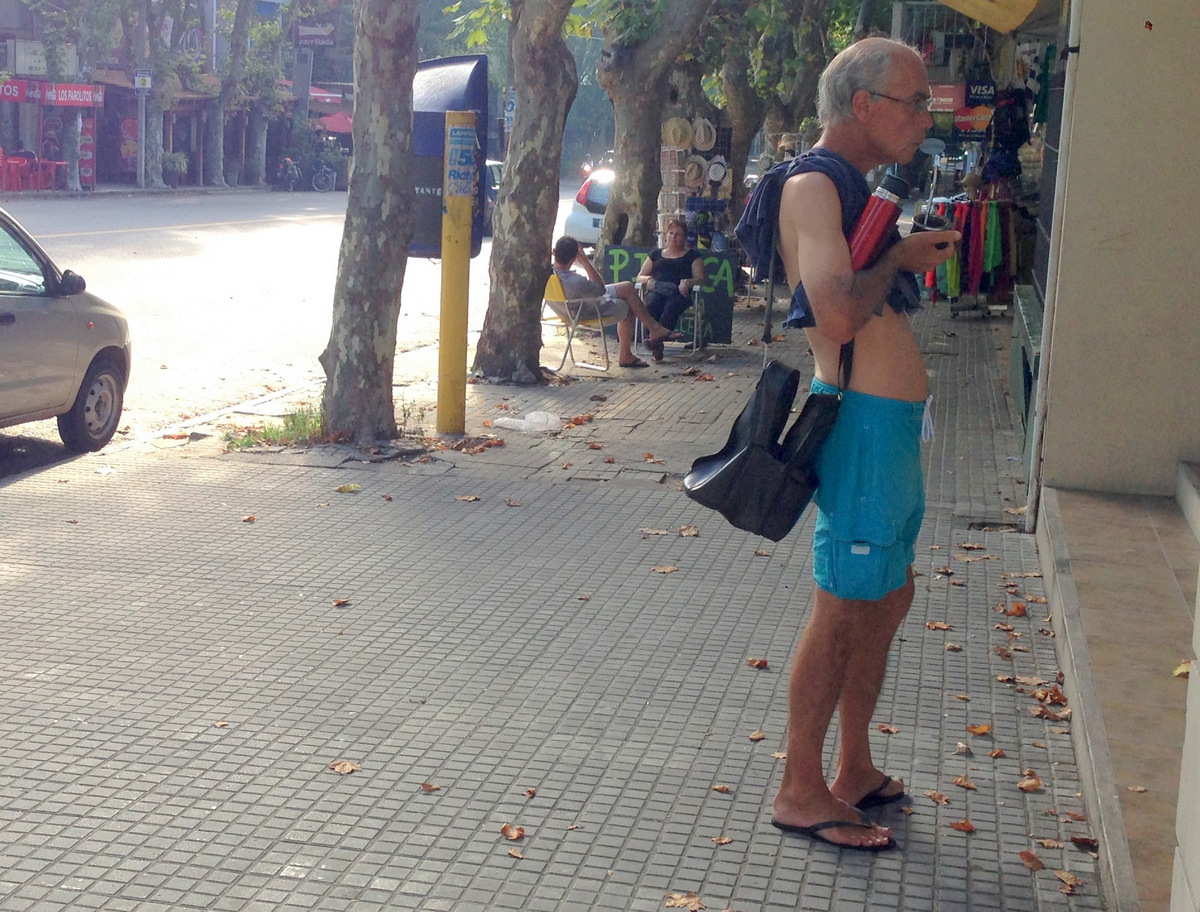
This man is carrying his thermos of water, which he uses to refill his mate cup. Apparently, this drink also keeps you thin.

This man, like so many other people in this town, is carrying his thermos of water, which he uses to refill his maté cup, which he sips at through a metal straw while walking down the street. Apparently, this drink also keeps you thin.

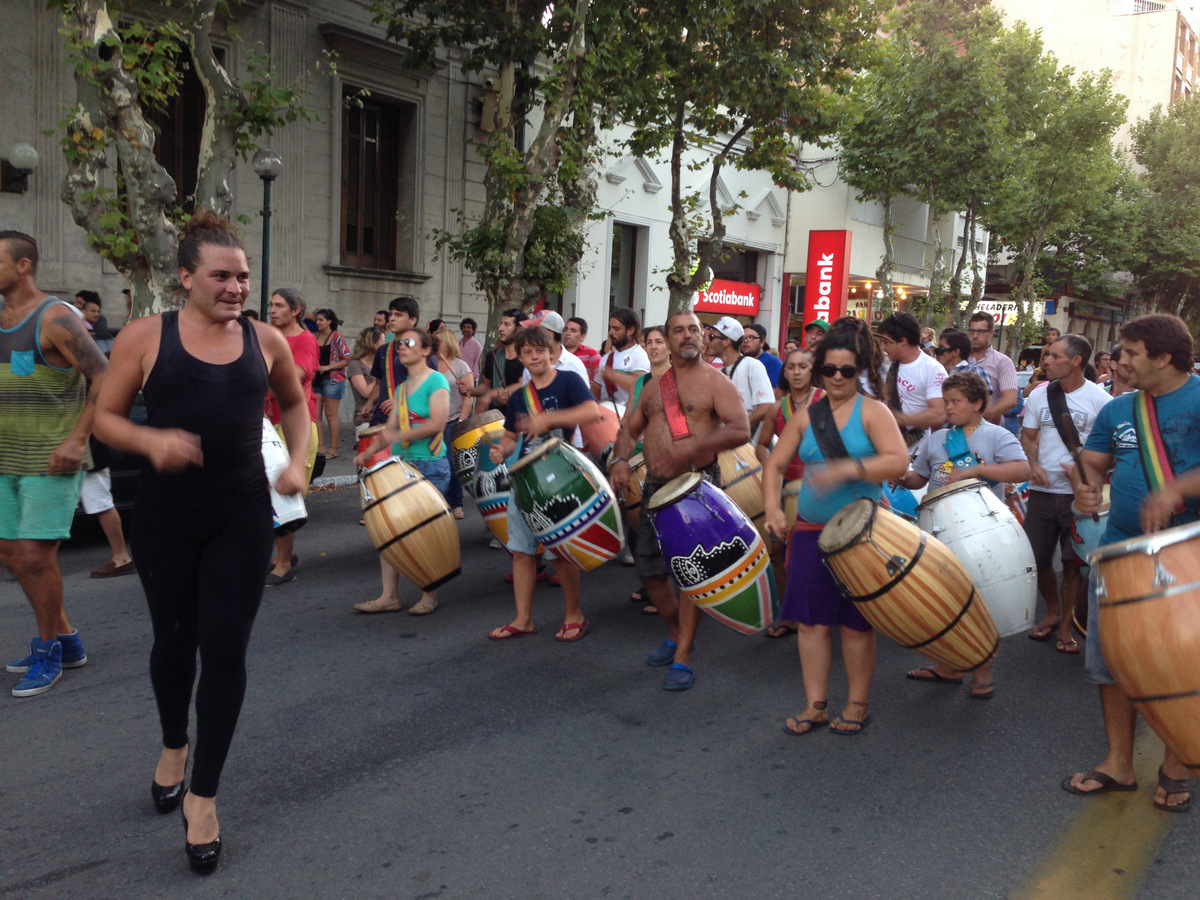
We even stumbled across a parade led by a man in very high heels.

Just another day in Colonia. In addition to an excellent national sandwich, Uruguay has progressive laws on abortion and same sex marriage to boot.

Just another day in Colonia. In addition to the world’s finest national sandwich, Uruguay has progressive laws on abortion and same sex marriage to boot.

You can walk the length of Colonia in about fifteen minutes. There’s a charming little marina and the people are amazingly polite. Oh, and you can eat a chivito.

Yes, it’s the moment you’ve all been waiting for, the chivito.

This sandwich is like nothing I’ve ever seen, or eaten. Chivito means little goat, but there’s no actual goat in it. Why little goat? Who cares? The sandwich has been hardening arteries in Uruguay for seventy years or so, and you can get one on every single street in this town. What is it? What isn’t it? It’s a layer of thin sliced filet mignon with ham, melted cheese, a fried egg, lettuce, tomato, mayo, and about a dozen condiments including pickled vegetables, marinated peppers, olives, peas, carrots, and a bunch of other stuff I couldn’t identify. The whole shebang is served on a massive bun, which, if it does its job right (and it seldom does) stays together for at least two or three minutes before yielding to the pressure of its outsized contents and disintegrating into a pile of stuff in front of you.

There is another sandwich that takes the chivito to another, even more sinister, level – the Milanesa. In the Milanesa, instead of a thin slice of filet, they insert a hubcap-sized portion of breaded, fried chicken or steak that hangs over the rest of the sandwich like a diving board.

That’s right, they take all that stuff and add a piece of deep fried meat to it. Mike Bloomberg, bless him, will never set foot in Uruguay for this reason alone.

As this barely-safe-for-work photo will prove, the result is absolutely obscene.

Here it is, in all its glory, the chivito! (Actually this is a Milanesa with chivito fillings, but whatever.)

Here it is, in all its glory, the chivito! (Actually this is a Milanesa with chivito fillings, but whatever.)

The equally obscene cutaway shot.

The equally obscene cutaway shot, taken from our balcony.

I had three of these in three days this week. If I stay in this town for much longer, I will have to be loaded by crane onto a barge and evacuated for my own protection. I secretly suspect my wife is contacting the producers of some intervention reality show as I type.

Let’s meet some Turks

I have heard endless stories about Turkish hospitality, and I can’t say if these are Turkish traits or not, but in a very short time we have met people who feel like they represent an archetype – the Turquetype, if you will – albeit in vastly different ways.

Let’s meet a few.

Friends as family

When we lived in DC, we became friends with Janine’s co-worker Judy and Judy’s husband Haluk, who was born and raised in the old neighborhood in Istanbul called Sultanahmet. When Haluk found out we were coming to Istanbul, he insisted on picking us up at the airport. He commutes between DC and Istanbul, and he was planning to leave the day after we arrived so he put us in the care of his childhood friend Oktay and Oktay’s brother Adam. They own a restaurant and a handful of other businesses, and they check in on us daily and make sure that we’re well taken care of. When we are in the neighborhood, we make sure to stop by one of the shops, where we hang out and visit. Sometimes Oktay and I head down to the teahouse in the evening and play backgammon. Oktay says that since we’re Haluk’s friends and Haluk is like family, then we are by extension family, and he seems quite sincere about it. It’s like a Turkish syllogism.

Oktay beating me at backgammon

Oktay beating me at backgammon

We were at the restaurant the other night and Adam reported that the guy who plays the reed flute for the whirling Dervishes at the restaurant brought a pile of fish he caught off the banks of the Bosphorous into the restaurant. Would we like some? (A brief aside about the whirling Dervishes. I had grown up thinking that a whirling Dervish was a person with uncontrollable restless energy. Far from it. The Dervishes are practicing a form of Sufi religion in which they arrive at a meditative state that allows them to close their eyes and turn around hundreds and hundreds of times without tossing their lunch all over the front row. If it’s a party trick, it’s a great one. I confess I now have an obsession with these guys.)

Seriously, do NOT try this at home

Seriously, do NOT try this at home

Of course we want Dervish flautist fish. You don’t get that every day. It’s nice to be family.

Other Turquetypes

The crossroads guy during challenging times

Turkey is the bridge between Europe and Asia. In fact, you can cross a bridge in Istanbul and go from Europe to Asia. The other part of this position as crossroads of the world is that Turkey is in the middle of a mess of problems. The country shares long, tense borders with Syria, Iraq, and Iran. Since the Syrian civil war got going, more than 1.5 million Syrian refugees have poured into the country. We met one the other night at dinner. Over the course of our dinner, Muhammad told us that he fled Syria for Kurdish Iraq two years ago, and slipped across the border into Turkey earlier this year. His family left Aleppo, and he can’t imagine the day when he’ll be able to return, or if he does, what will be left. Muhammad was gracious, kind, and he was obviously very sad. I wish him well, but worry for him and his family. Turkey may find itself hosting Muhammed and his countrymen and women for many many years to come. They can’t go home, so they’ll have to stay.

The tout

If you walk ten feet in Istanbul, some guy will try to get you to come into his restaurant, his carpet store, his souvenir stand, or for all I know, his proctology clinic. At Muhammed’s restaurant, where you can get a very nice grilled fish, a friendly, short, stocky fellow in a leather jacket spends his evenings trying to reel in customers. Turns out fishing is in his blood. “In the morning, I fish for fish,” he told me. “In the night, I fish for people!” and pantomimed tossing out his rod and reeling in a couple that was making its way up the hill. He’s not bad at, either. He caught us, after all, and the fish was excellent.

Another fisher of people tried to strike up a conversation, which is simply a pretense to reel you into his business. A young kid named Mehmet wasn’t nearly as skilled as our fisherman friend, but he did his best, even though he didn’t quite have the vocabulary for an extensive conversation. He asked me where I was from, I asked him where he was from, he asked if I wanted to have dinner, I told him I had already eaten. Then I asked his name and he said “Mehmet” and took my hand, shook it, and air kissed me in the direction of both cheeks like he was in the Hamptons, or, it turns out, Istanbul.

The trailblazer

Fatima runs our favorite restaurant in Turkey so far, called Shirahne Cave Restaurant, in Goreme, which is in the central Turkey region called Capadoccia. Goreme is one of those cave towns in Capadoccia in which people have hollowed out the volcanic cliffs and outcroppings and turned them into dwellings. In the past several decades, locals have converted their homes into hotels and restaurants. On this night we ate in a cave and we slept in a cave.

IMG_1098

Be it ever so cave-like, there’s no place like home.

The town is almost comically charming. We wandered up one hill and perched ourselves in a bar overlooking the floodlit town, which brings to mind something out of an animated Disney film.

Goreme at night

Goreme at night

Goreme is a jumping off point for hot air balloon rides and tours of the cave churches and underground cities that dot the region and they’ve done a good job of making the place quite hospitable.

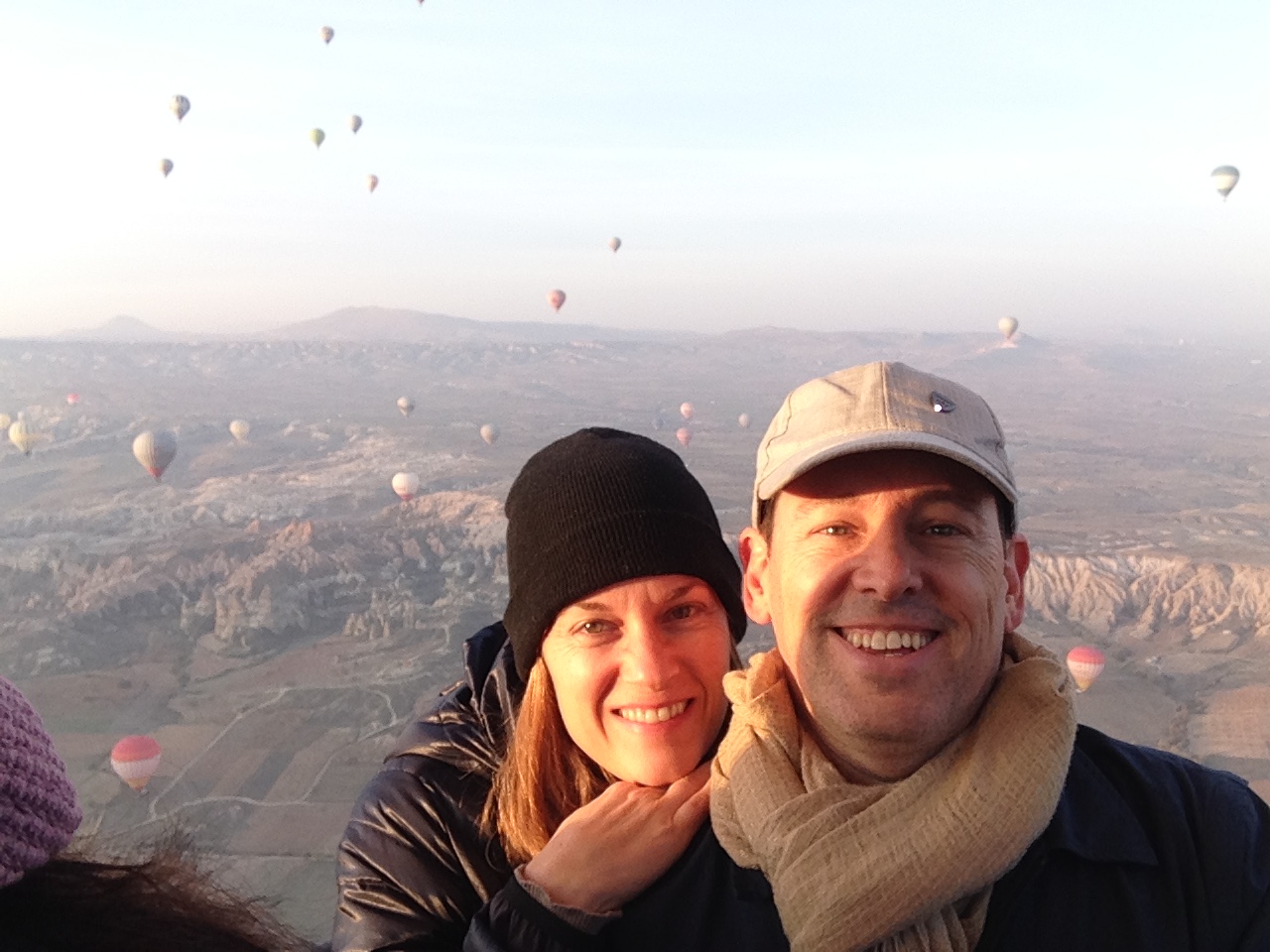
From 1,500 feet up

From 1,500 feet up

After our sundowner, we were getting peckish and we glanced at the menu in front of Shirahne and were thrilled to finally find a place that didn’t have kebabs, hamburgers, or pizza on the menu.

The first night (we went back again the next evening) we had chicken with chickpeas and a handmade pasta that was a lot like spaetzle all served together in a tomato broth. It was the Turkish red pozole, and just as homey and loving. We also had eggplant stuffed with spiced ground beef and a dandy Capadoccian white wine.

The next night we had tiny handmade pasta squares (which reminded me of the Goodman’s squares that my grandmother used to put in her chicken soup) tossed in homemade yogurt and topped with a tangy tomato sauce. It’s as simple as it sounds, but I can’t wait to make it when we get back home. I’d add a bit of dill and serve it as a side dish to a lamb tagine. sounds good, huh? We also had a local black zucchini (Fatima said that were the last of the season) served in clay pot with tomatoes, beef, onions, and peppers. It was a deep, soulful relief to eat real Turkish food after a week of very simple fare. (Although the simple stuff isn’t all bad – one popular street food is a crazy stuffed baked potato called a kumpir that has everything except camel sashimi in it. Janine tucked into one like she’d never eaten before.)

Don't try this at home either

Don’t try this at home either

The real highlight, though, was chatting with Fatima. She feels the pressure of attempting to do real food in a tourist town. Likewise, she is a very modern woman in a place that, by her reckoning, is ambivalent about the role of women these days. She wears jeans and doesn’t cover her head, which in central Turkey has different implications than it may have in Istanbul or on the more European west coast. She told us that she agreed to marry her husband on the condition that he didn’t smoke or drink. The World Health Organization says that 41 percent of Turkish males smoke, but given the astonishing amount of smoking we’ve seen, I find that figure hard to believe. In any case, it’s an audacious requirement here, but Fatima issued it nevertheless. She mostly employs women in the restaurant because they are more reliable and she wants to give them an opportunity to develop marketable skills. She is raising her daughters to be independent, and she has encouraged her first child to delay getting married until she has finished college.

Can you really claim to know something about a person after a brief encounter in a restaurant, or even a week sitting in their shop drinking their tea? Probably not. I’m no more an expert on Turkish people than I am on Turkish taffy. But it’s valuable to try to look just a little bit deeper. The open top bus is fun, but you also have to get off an walk around every once in a while.